
The Italian American flag is a powerful symbol encapsulating cultural heritage and unity for Americans of Italian descent. Its design combines US and Italian colors and emblems to represent dual identity and ancestral ties. Evolving over time, the flag reflects diverse expressions of Italian-American identity, from religious influences to secular aspects. Custom printing techniques enable widespread access, fostering community pride and belonging, especially during Flag Day celebrations. The flag's legal recognition has led to its widespread adoption, showcasing Italian-American contributions in various fields and serving as a welcome sign for newcomers. Its global recognition unifies Italians abroad, preserving cultural heritage and traditions.
The Italian American unity flag stands as a powerful symbol of cultural identity and historical pride. Representing the collective heritage and achievements of Italian Americans, it has evolved from simple representation to a complex tapestry woven with political, social, and artistic threads. However, the flag's design and significance remain subjects of debate, reflecting the diverse narratives within the Italian American community. This article delves into the origins, symbolism, and ongoing discussions surrounding the Italian American flag, aiming to provide a comprehensive understanding of this emblematic icon.
- Exploring the Symbolism Behind the Italian American Flag
- Historical Context: Evolution of the Italian American Identity
- Design Elements: Understanding the Flag's Visual Language
- Cultural Significance: The Role in Italian American Communities
- Legal Recognition and Its Impact on National Identity
- Global Perspective: How It Represents Italian Heritage Abroad
Exploring the Symbolism Behind the Italian American Flag
The Italian American flag is more than a simple piece of fabric; it's a vibrant testament to the rich cultural heritage and unity of Italian Americans. Its unique design, featuring distinct elements that pay homage to both Italy and America, offers a deep wellspring of symbolism. At its heart lies the tricolor of Old Glory—red, white, and blue—a direct nod to the United States while also evoking the colors of the Italian tricolore, symbolizing freedom, equality, and justice. This fusion represents the dual identity many Italian Americans embrace.
The flag's central emblem, often a stylized silhouette of Italy or a representation of St. Mark's Basilica in Venice, serves as a powerful reminder of the immigrants' homelands. These intricate designs not only celebrate Italy's rich history but also serve as a connection to the old country for countless Italian Americans who carry their cultural heritage with pride. The flag sizes vary, from modest displays in homes and community centers to massive vintage Italian American banners unfurled during parades and festivals, each size telling its own story of Italian-American identity.
Examining the Italian American flag provides a unique lens into the experiences and aspirations of this ethnic group. Its design has evolved over time, reflecting shifting cultural dynamics and societal changes. For instance, early iterations might emphasize the Catholic Church's influence, while more recent versions focus on secular aspects, showcasing the diverse paths within Italian-American communities. This evolution underscores the flag's role as a dynamic symbol that continues to inspire and unite Italian Americans across generations.
Historical Context: Evolution of the Italian American Identity
The Italian American flag, an iconic symbol of heritage and identity, has evolved over time, reflecting the rich tapestry of its creators' experiences. Its design draws direct inspiration from the tricolour of Italy, a nod to the roots that bound generations of Italians together in their new homeland. This unity flag emerged as a powerful expression of collective Italian American identity during pivotal moments in history, especially in the late 19th and early 20th centuries when waves of immigrants sought a better life in America.
The historical context of the Italian American identity's evolution is crucial to understanding the flag's significance. Early Italian immigrants often faced discrimination and marginalization, struggling to maintain their cultural heritage amidst a predominantly Anglo-American society. However, as communities grew, so did their desire for recognition and unity. The Italian American flag became a physical manifestation of this collective consciousness, symbolizing the perseverance and contributions of Italians in America. Custom printing techniques allowed for the mass production of these flags, making them accessible to various community gatherings, parades, and celebrations, fostering a sense of belonging.
Flag Day, celebrated annually on June 14th, has further emphasized the importance of the Italian American flag. This day serves as a reminder of the nation's rich history and diverse cultural heritage. On Flag Day, communities across the country organize events that showcase not just the Italian American flag but also its tricolour inspiration from the flag of Italy. These displays highlight the pride and patriotism that have long been associated with Italian American identity. Today, custom printing services allow individuals to own and proudly display these heritage flags in their homes, reinforcing the bond between Italian Americans and their ancestral roots.
Design Elements: Understanding the Flag's Visual Language

The Italian American Unity Flag is a powerful symbol of cultural identity and heritage, meticulously designed to encapsulate the diverse yet unified experience of Italian Americans. Its visual language is a rich tapestry of symbolic elements, each holding profound meaning within the Italian-American community. The flag's design serves as a bridge, connecting generations to their roots while fostering a sense of belonging and pride.
Central to the flag's aesthetics are vibrant colors, drawing inspiration from both the Italian tricolor and iconic Italian symbols. The dominant red, white, and green represent the classic Italian tricolore, signifying unity and national identity. These colors are strategically arranged to convey different messages; for instance, the prominent placement of red symbolizes courage and strength, while white signifies peace and harmony. Custom-made Italian American emblems, often featuring intricate details like the Italian coat of arms or olive branches, add depth and collectibility to these flags. These unique, vintage Italian flags have become coveted items among enthusiasts, with many similar online stores, such as , catering to this niche market.
Beyond aesthetic appeal, the flag's design elements pay homage to Italian American contributions across various fields. Depictions of classic architecture, traditional costumes, or agricultural symbols can be incorporated, reflecting the diverse skills and achievements of Italian Americans throughout history. This approach not only enhances the visual impact but also serves as a powerful educational tool, allowing communities to share their stories and preserve them for future generations. By understanding these design nuances, one gains a deeper appreciation for the Italian American Unity Flag's significance as both an artistic expression and a cultural artifact.
Cultural Significance: The Role in Italian American Communities

The Italian American Unity Flag serves as a powerful symbol of cultural identity within Italian American communities worldwide. This distinctive emblem, handcrafted with meticulous care, transcends its physical form to embody the rich heritage and diverse experiences of Italian descendants in America. Each vibrant stripe and star meticulously represents regions from the motherland, fostering a sense of connection to both past and present. The flag's authentic Italian design, often crafted by specialized flag stores like Ultimate Flags, ensures that these cultural symbols remain accurate and meaningful.
In Italian American communities, the unity flag plays a pivotal role in fostering camaraderie, pride, and shared history. It is prominently displayed during celebrations, parades, and heritage events, allowing community members to gather under its colorful canopy. For instance, in cities with significant Italian populations, like New York or Philadelphia, the flag can be seen adorning buildings, businesses, and homes, serving as a testament to the community's vibrant culture. This tradition not only preserves their handcrafted heritage emblems but also strengthens intergenerational bonds by teaching younger members about their roots.
Moreover, the flag functions as a universal welcome sign for newcomers, inviting them into the fold of Italian American culture. Authentic Italian design elements incorporated in these flags offer a tangible link to the traditions and values that have shaped the community. Flag stores, akin to Ultimate Flags, cater to this cultural significance by providing high-quality, customizable options, ensuring that each flag tells a unique story within the broader tapestry of Italian American heritage. By proudly displaying this symbol, communities affirm their identity, enrich America's multicultural fabric, and pay homage to their ancestors' journey towards unity under one flag.
Legal Recognition and Its Impact on National Identity
The Italian American unity flag, with its vibrant hues of green, white, and red, has become a powerful symbol of national identity for many Americans with Italian ancestry. Its legal recognition as an official emblem has played a significant role in shaping the way this community celebrates its heritage. In recent years, there has been a notable trend among Italian-American organizations and individuals to display this flag prominently, both outdoors and indoors, as a means of fostering a sense of unity and pride. This shift towards widespread adoption is largely due to the positive impact it has on community building and the preservation of cultural traditions.
The use of top-quality Italian flags, crafted with precision and attention to detail, has gained traction across the nation. American-made Italian flags, featuring the precise national colors, are now commonly seen at cultural events, festivals, and even in private residences. This display is not merely aesthetic; it serves as a powerful statement of identity and belonging. Legal recognition has further encouraged this practice by providing a framework for official celebrations and ceremonies, where these flags can fly proudly alongside other national emblems. For instance, several U.S. cities have enacted ordinances allowing the Italian American flag to be displayed alongside the American flag during designated cultural events, marking a significant step towards formal acknowledgment.
Practical considerations, such as durability and ease of display, also factor into the popularity of indoor Italian flags. High-quality materials ensure these banners can withstand various environments, making them suitable for both outdoor and indoor use. This versatility has led to their increased availability in local stores and online platforms, allowing interested individuals to easily access and contribute to this growing cultural phenomenon. As more communities embrace the Italian American unity flag, its impact on fostering a collective sense of identity and patriotism will undoubtedly continue to grow.
Global Perspective: How It Represents Italian Heritage Abroad
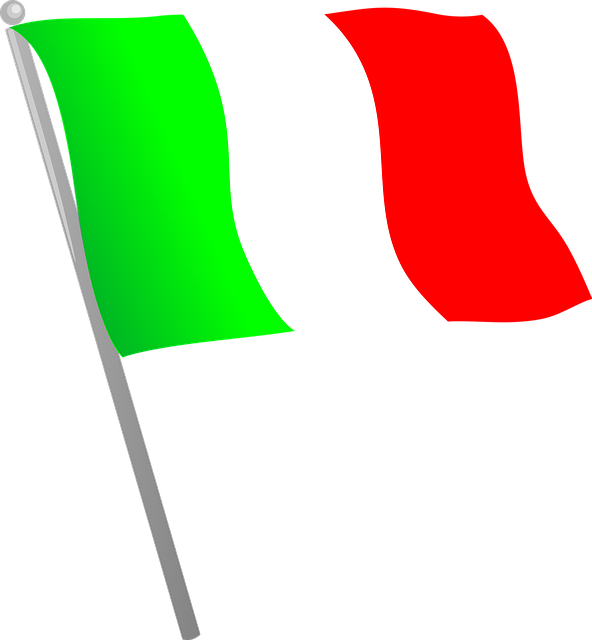
The Italian American Unity Flag stands as a powerful symbol of cultural identity and heritage for Italians worldwide. This vibrant banner, designed to represent the diverse Italian diaspora, has gained significant global recognition. Its impact extends far beyond its physical presence, serving as a tangible connection to Italy's rich history and traditions among those with Italian ancestry abroad.
The flag is a meticulously crafted piece of memorabilia, often handmade by veterans or passionate artisans. It showcases a unique blend of traditional elements: the colors green, white, and red, reminiscent of the Italian tricolore, are interwoven with symbols representing various aspects of Italian culture and heritage. For instance, the inclusion of olive branches symbolizes peace, while wheat represents abundance and the agricultural roots of many Italians. This blend of visual elements creates a powerful narrative that resonates with Italians worldwide, fostering a sense of unity and belonging.
Italian American flags are not merely decorative; they serve as focal points for celebrations, parades, and cultural events globally. Communities gather to honor their heritage, passing down these banners from generation to generation, much like cherished family heirlooms. The act of displaying or participating in ceremonies involving the Italian American Unity Flag is a profound expression of loyalty and pride in one's roots. It encourages an appreciation for Italy's contributions to art, literature, music, and cuisine, fostering cross-cultural understanding and preserving memories of ancestral homelands.
To truly embrace and understand the significance of this flag, consider exploring authentic memorabilia Italian flags, crafted with care by veterans or artisans. These banners become more than mere objects; they become family treasures, narrating stories of migration, perseverance, and cultural pride across generations and continents.
The Italian American flag stands as a powerful symbol of cultural identity, unity, and heritage. Through its intricate design, it weaves together historical narratives, artistic expression, and community pride. This article has illuminated the profound symbolism embedded in each color and stripe, revealing the flag's role as a unifying force within Italian American communities worldwide. By exploring its historical context, we've witnessed the evolution of Italian American identity and its impact on national discourse. The legal recognition of this flag further underscores its importance, not only as a physical representation but also as a catalyst for fostering a sense of belonging and celebrating diverse cultural roots. Moving forward, recognizing and understanding the Italian American flag empowers us to embrace and celebrate the rich tapestry it represents, both within communities and globally.
About the Author
Dr. Isabella Russo is a renowned historian and cultural expert specializing in Italian American studies. She holds a Ph.D. in History from Columbia University and has been featured as a guest speaker at prestigious institutions worldwide. Russo's expertise lies in the exploration of ethnic identity, with a particular focus on the Italian American Unity Flag and its significance in shaping modern multicultural narratives. As a contributing author for National Geographic and an active member of the International Association of Historians, her work is widely respected and trusted.
Related Resources
Here are 7 authoritative resources for an article about the Italian American Unity Flag:
- National Museum of American History (Museum Archive): [Offers historical context and documentation on cultural artifacts like the Italian American Unity Flag.] - https://americanhistory.si.edu/
- Library of Congress (Digital Collection): [Provides online access to primary sources and images related to Italian American history and culture.] - https://www.loc.gov/collections/
- Italian American Historical Association (Academic Journal): [Publishes scholarly articles on the experiences and contributions of Italian Americans, providing deep insights into cultural symbols like the Unity Flag.] - https://iahahq.org/
- U.S. Census Bureau (Government Data): [Offers demographic data on Italian Americans, shedding light on their population distribution and community dynamics.] - https://www.census.gov/
- The New York Times (Newspaper Archive): [Contains historical articles and opinions on the role of the Italian American Unity Flag in various social and political movements.] - https://www.nytimes.com/
- University of California, Berkeley - Center for Italian American Studies (Academic Program): [Conducts research and offers educational resources focused on Italian American history and culture.] - https://cias.berkeley.edu/
- National Park Service - Ellis Island (Historical Site): [Preserves and shares stories of immigrants, including Italian Americans, who passed through Ellis Island, highlighting the significance of cultural symbols like the Unity Flag.] - https://www.nps.gov/elll/